

BIG QUESTIONS
Where have all the courageous marketers gone?
Remember when “let’s blow it up and try something wild” was a valid creative brief? We do… but it’s been a goooood looonng while. These days, risk feels like a luxury most brands think they can’t afford — thanks to budget cuts, metric mania, and approval chains long enough to wrap around the planet… twice. But it’s exactly that kind of “caution to the wind” risk-taking that great brands are made of… and always have been. Take Anthropic’s recent TV ad for Claude, which starts with the words, “There’s never been a worse time,” repeated over and over. Imagine that: starting with a negative statement. Many of today’s marketers break out in hives at the very thought. But it’s this bold, counterintuitive approach that captures attention because 1) it’s different, and 2) in today’s chaotic world, it has a truthy ring to it. They then flip the script with “There’s never been a better time to have a problem,” to highlight the many strengths of their product and its remarkable ability to help humans solve problems. It’s a powerful ad because of the juxtaposition, the friction between the two ideas, and the simplicity of the thought. But the key ingredient in the brand-building pot of stew is guts.
Bottom line: Brave clients still exist (maybe you’re one of them), but they need to be reminded of the power of big bets. Fortune favors the bold.
TOOL JOY
Brainsparker: Reignite your creativity
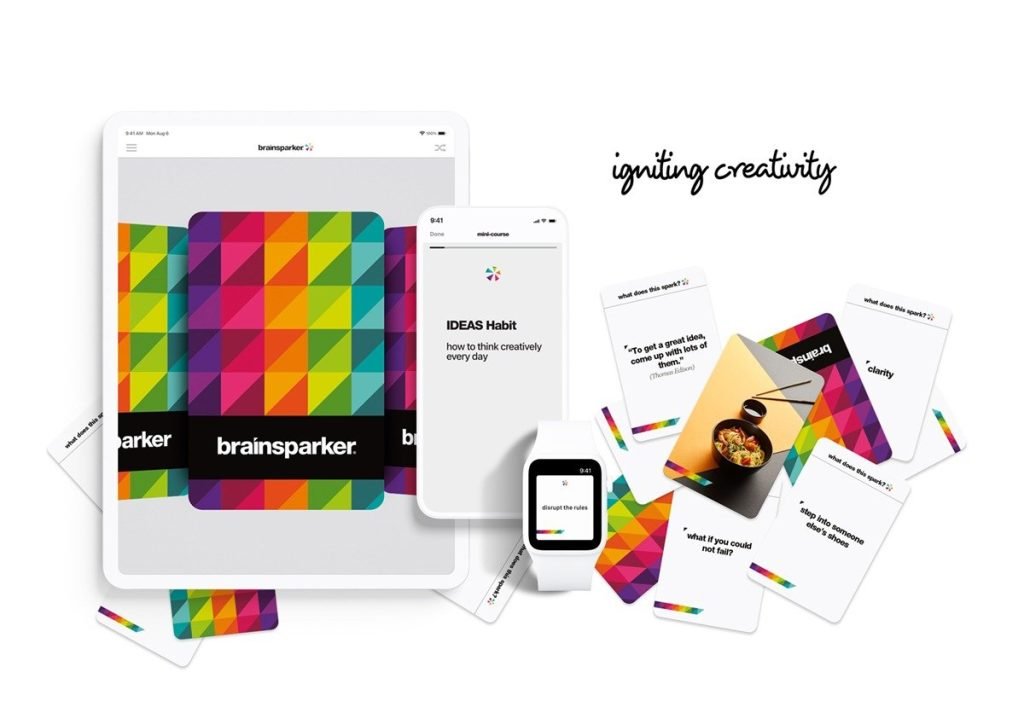
Creative ruts happen — even to the most innovative and clever minds. And when your brain is stuck in the idea-less muck, no amount of tire spinning can get you out. Enter Brainsparker, a suite of creative brainstorming tools designed to trigger your creative spark and get big ideas flowing again. Around for 10+ years and trusted by more than 500K creatives, the company uses a recipe of science-backed coaching and neuroscience to help you build daily creative habits and overcome pesky mind blocks. Choose from an AI Creativity Coach, a free mobile app jam-packed with card prompts, curated music, and tips (upgraded subscriptions available), or the company’s downloadable “Sparker Kits” to boost your team brainstorming sessions.
DESIGN WE ❤️
The Scale of Life

In those odd quiet moments that occur randomly throughout our busy days, did your mind ever wander to random places? Perhaps you glanced up into the sky as you waited for your coffee to brew and noticed the long contrail of a passenger jet and pondered how many flights had taken off that day. Or maybe your curious kid asked you how many miles through space we travelled through this year. The Scale of Life answers those questions (with a decidedly utilitarian, old-school design execution; perhaps a missed opportunity to elevate the data with beautiful animated data viz…), and myriad others with a live feed of global stats, tracking common subjects like births, to things that would never occur to most of us, like skin cells shed by our bodies over the last 365 days (about 180,000,000). Yikes.
BEEP BOOP
The world’s most famous tagline: Nike’s “Just Do It” was inspired by the final words spoken by spree killer Gary Gilmore shortly before his execution in 1977: “Let’s do it” (and “do it” they did).
?Spooky-season splurge: Consumers are expected to drop a record-breaking $13.1B this Halloween season, with candy taking the crown. Time for marketers to conjure up some last-minute campaigns?
Couric goes full circle:Katie Couric’s new PSA urges colon cancer screening — a callback to her groundbreaking televised colonoscopy — while poking fun at American Eagle’s controversial jeans ad. It’s part health lesson, part marketing wink for unforgettable messaging.
Pinwheel founder goes on air: Sitting down with brand strategist Jessica Jalowiec at Crowdsourced, Pinwheel ECD/Founder Todd Anthony talked about clients who rely on AI-only content and what it means for trust, storytelling, and brand — and why “AI doesn’t have an id… it algorithms its way into human experience.”
WORD TO THE WISE
“I am one who believes that one of the greatest dangers of advertising is not that of misleading people, but that of boring them to death.”
— Leo Burnett
WHAT CLIENTS WANT
Here are the five conversations every aspiring CMO needs to have this quarter:
- The “What’s broken?” conversation with sales: Take your head of sales out for coffee or lunch and ask them: “What’s the single biggest obstacle your team faces every day?” Then listen. You’ll uncover more about customer friction in that one hour than in a month of internal meetings.
- The “How do we really make money?” conversation with finance: Ask your CFO to walk you through the P&L. Understand every line item. When you can confidently connect your campaigns to profit margins and operating costs, you stop being a “cost center” and start being a business leader.
- The “What keeps you up at night?” conversation with the CEO: This takes guts, but it’s a game-changer. You need to understand the one or two things that truly worry the CEO. Is it a competitor? A market shift? An operational weakness? Your job is to position marketing as the solution to their biggest problem.
- The “What’s our #1 complaint?” conversation with customer service: A CMO’s customer service team is an insight gold mine. Ask them: “What’s the one complaint you are sick of hearing?” That frustration is your next big opportunity. Solve that problem, and you’ll have a powerful story to tell.
- The “What’s my blind spot?” conversation with your team: This isn’t about making them feel heard. It’s about asking for the unvarnished truth. “What is the one skill or behavior I need to change to be a better boss?” Be prepared for a tough answer. This is how you grow.
These conversations require courage. But they are worth their weight in gold.
— Credit to Stephanie McCarty, CMO at Taylor Morrison
ICEBREAKER
What’s been on your bucket list that you’ve been too chicken to try?
Kim: Sharks kinda freak me out, but I’d love to get over that fear by cage-diving with them.
Todd: I was going skydiving one day, but the wind picked up and we had to cancel (I’d even done the training). Still haven’t jumped, but the older I get the more gumption it takes.
Melissa: I want to take a pottery class. I am not artistic — and totally intimidated by my artistic kid — and yet this is something that has always interested me.
Sarah: Dance lessons. But my moves are like Monica’s in that tap class on Friends. One day I may get brave and pull the trigger, but for now I’ll stay lurking on inspo dance accounts, like @the.joy.of.dance, which documents a dear friend’s dance journey, inspiring 21K+ followers.
John: Now that I live ~150 meters from the Mediterranean, I’d love to start kayaking or paddle boarding. But something about deep water that I can’t see into very far scares the bejeezus out of me — it feels like a very vulnerable place to put yourself.
Irene: Scuba diving. I’m half too chicken, half in the wrong part of the world, but it’ll happen one day!
Jason: Sailing across an ocean is definitely on my bucket list — just haven’t had the right opportunity yet. It’s a big commitment, you’re talking 10–14 days out there.
Laura: I’ve started following a bunch of (not famous) artists on Instagram and am inspired so much. I want to take a painting class, but I’m scared that at my age, my brain can’t be taught to see things like a painter does.
FALLACIES, PARADOXES & THEORIES…OH MY
Hindsight bias: When everyone is psychic
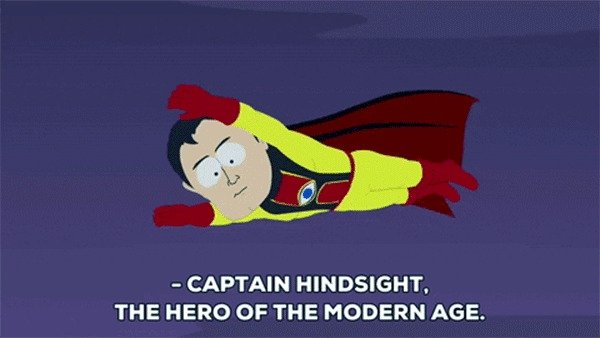
You enter the campaign post-mortem and hindsight bias saunters into the room with a grande cold brew and says, “Yeah, I knew it wouldn’t work.” Strangely, this psychic clarity never appears before launch. Team members retroactively crown themselves prophets (“The copy was too clever!” “The pack shot was poorly lit!”), confidently rewriting the past instead of examining what really happened. Did they really know it all along? Or do they just feel like they did now that the click-through rate is staring them in the face? Whatever the case, this kind of noise usually just obscures the real reason a campaign did or didn’t work.
The lesson: Testing marketing campaigns isn’t gut-based improv. It’s a science, and it demands a scientist’s mindset. If a team member isn’t trained in research and/or the interpretation of performance data, then they probably shouldn’t be in that meeting.


