

BIG QUESTIONS
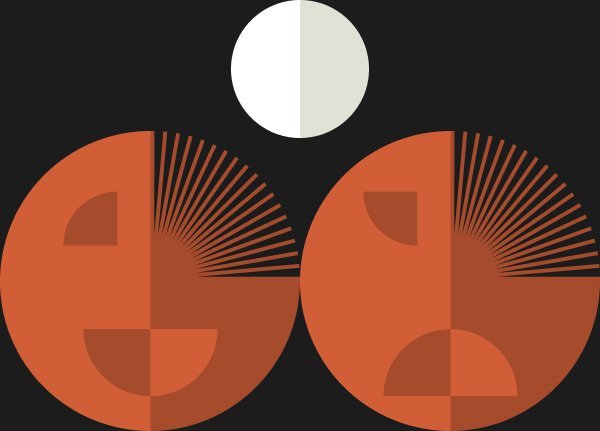
Does your brand have good taste?
As the deluge of AI-generated content clogs our lives, a chasm has opened up between what sounds “pretty good” and what actually lands, makes an impact, and performs in the market. And that chasm is where human taste sits. Because machines are designed to recognize and reproduce patterns, they don’t really have “taste.” Because taste includes pattern rejection and the concept of restraint. Taste is informed by human experience. Taste includes the notion of standing out in an original way. Taste knows when a tagline is played out or a headline is going to hit like cheap motel wallpaper. AI can only remix “the known;” it cannot feel what is fresh, gutsy, or quietly brilliant. Only humans can do that.
Without human taste, AI content struts confidently into tone-deaf territory – missing satire, recycling old tropes, spewing lame headlines, or putting its nonexistent foot in its nonexistent mouth. These aren’t just whoopsies. They’re trust-eroders. Like spilling a mug of battery acid on your brand image every damn day. The best marketing and content plays with nuance and boundaries. You can’t prompt this kind of sensibility or coax it from a machine. Taste can only come from the lived experience and the judgment of humans. In a world where automation is eating everything, taste is the last competitive edge standing – and it’s a critical component of successful marketing and a healthy brand.
TOOL JOY
Nano Banana: Not just a fun name
Google’s newest AI tool, Gemini 2.5 Flash, generates or edits images based on your text prompts. (The nickname “Nano Banana” stems from a very banana-forward promotional video from Google.) It’s great at adding elements to existing images, blending scenes, and understanding more complex prompts. The tool even keeps decent “character consistency” across multiple pictures and spits out your image in less than a minute. We think it’s worth a try based on the fun name alone, but its output is pretty cool, too.
DESIGN WE ❤️
The horror!
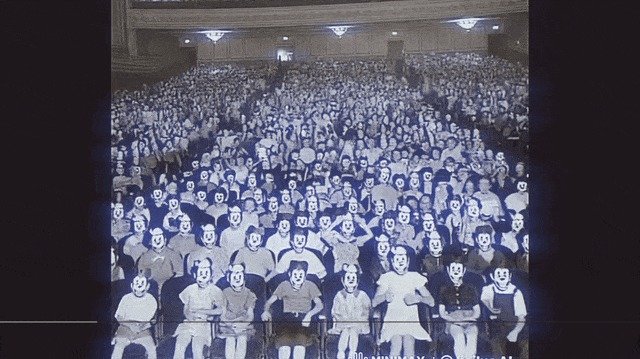
Here’s a deeply unsettling AI-generated video if you need something to get you in the Halloween spirit. If you want to up your game, dust off your projector and play the video on your garage door to scare away any pesky, free loading trick-or-treaters. Happy Halloween!
BEEP BOOP

Pretty stories: Brands in 2025 are leaning heavily into illustrators to reimagine new worlds for them. It’s visual storytelling season!
Approaching burnout speed: “The danger must be growing, for the rowers keep on rowing, and they’re certainly not showing any signs that they are slowing.” – Willy Wonka. Creative Boom just dropped a burnout survival guide for creative professionals.
Be yourself? Some parts of you, says one Substacker, only emerge when in the company of certain people. Every relationship “behaves like a kind of psychic technology. Two minds meet, exchange a pattern of attention, and, almost invisibly, each begins to reorganise around the other.” Feels true.
Atlas has entered the chat: Will ChatGPT’s brand-new web browser, Atlas, kill Google like video killed the radio star? Time will tell. But since it’s only available to Mac users right now (and apparently largely powered by Google),, death for the world’s favorite search engine is far from imminent.
Trick or treat: Brands are leaning into their scary side this Halloween. We love Yahoo!’s Reply All Instagram horror flick, Skittles’ Ghost Roommate TikTok series, and this extra-spooky brand stunt with Mini dressed as a “ghost” Waymo self-driving car.
WORD TO THE WISE
“What is most personal is most universal.”
— Carl R. Rogers, American psychologist, one of the founders of humanistic psychology
The personal becomes universal when it touches on the things we all wrestle with: identity, purpose, love, fear, connection. The container varies, but the core experience is something we humans share. (Thanks to Eric Eisenberg of Active Ingredients for this.)
WHAT CLIENTS WANT
How blog-heavy brands adapt for AI search
SEO-optimized blog content has traditionally been a great way to drive traffic to your site. But with LLMs now in the mix, the search game is changing (again). These eight tips can help your brand adapt for generative search:
- Prioritize fresh content. 85% of OpenAI citations were updated in the last 10 months. To get in the game, focus on publishing a mix of new content and refreshing existing blogs – prioritizing quality over quantity.
- Shift focus from get the click to deliver value beyond the click. Some queries may never send users to your site, so think about content that builds deeper engagement (email subscriptions, gated content, journey-based flows).
- Be an easily retrievable source. AI results favor answers to questions, brand mentions, and authoritative domains. Make sure content, domain, and brand are authoritative, well-structured, and easily “scrapable” by AI systems.
- Prioritize content types that AI is less likely to fully satisfy. Create more in-depth analyses, unique proprietary data, original research, interactive tools, multistep content, and branded web mentions.
- Recycle existing content in many traffic-driving channels. Continue to plug your content into social media, email newsletters, podcasts, and offline touchpoints to make sure you’re juicing the full value of it.
- Track new KPIs and dig into intent and conversions. Stop measuring keywords and article traffic. Track brand lift metrics instead (conversion rates, assisted conversions, lifetime value of visitors, AI referrals).
- Monitor your brand’s presence in AI answers. Use AI visibility tools, like Scrunch, to keep tabs on how your brand shows up in AI citations, whether queries lead to clicks, and how traffic has shifted for high-value posts.
- Oh, and work with Pinwheel. Pinwheel has a content rehab program that can take all of your existing content (previously just optimized for Google) and optimize it for AI. Just ask us.
ICEBREAKER
Studies show our taste in music stops evolving by age 30.5 due to a phenomenon called musical paralysis. Are you stuck on a particular genre or artist from back when?
Todd: I’ve always been very experimental in my music tastes. But I’ll always go back to the good ol’ fashioned Howlin’ Wolf-style Memphis blues – a taste I developed in my late 20s, early 30s.
Kim: Honestly, this tracks, and I’m not sure why! Maybe it’s because the Spotify algorithm freezes your musical tastes, or maybe I have less time for music discovery – but I’d like to get back into it soon.
Melissa: This isn’t me. Thanks to my musical kids, my musical taste is ever evolving and changing. I currently have the HAIM album on repeat. That doesn’t mean I will not play Alanis or Buddy Guy or Jerry Jeff Walker.
Irene: I think I have the opposite of musical paralysis. Especially since having a college radio show that my whole family listens to and gives me recommendations for, I’ll listen to just about anything and everything.
Sarah: My favs are still firmly grounded in NYC/UKs post-grunge rock revival – Walkmen, Strokes, Black Keys, The Heavy, White Stripes, Arctic Monkeys, etc. And I’m forever a sucker for all things hip-hop.
John: I think my musical taste is pretty eclectic, and I listen to music that suits my current mood, from dream pop to classical, to American folk and old-school hip-hop. But having been fortunate enough to grow up in the ’90s in the Bay Area, I’ll always be grateful from my exposure to all the amazing alt music that was created in that decade by bands like The Smashing Pumpkins, Jane’s Addiction, Pearl Jam, etc.
FALLACIES, PARADOXES & THEORIES…OH MY
Brandolini’s Law (aka the “Bullshit Asymmetry Principle”)
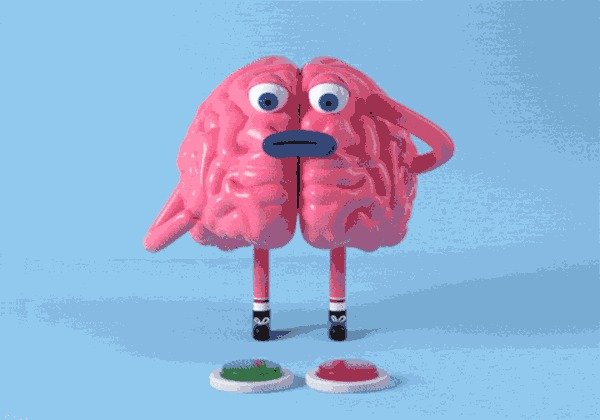
Welp, we are now living in the age of hot takes, clickbait, and pure bullshit. It’s everywhere. And part of the reason we’re soaking in this pool of info-sewage today is that it takes 10 times more effort (and time) to debunk “nonsense” than it does to produce it. That’s Brandolini’s law, coined in 2013 by Italian programmer Alberto Brandolini. Because one falsehood leads to hours of cleanup, lying and bullshitting is the lazy-bones way to get ahead. And there is just no shortage of intellectual layabouts these days. Brandolini’s law is why misinformation spreads like wildfire while your smart rebuttal gets three likes. Whether you’re fact-checking a subject matter expert, battling LinkedIn shamelessness, or explaining to your cousin that no, AI didn’t become sentient last week… just know: It’s not you, it’s that damned Brandolini fella.


