

BIG QUESTIONS
Are brands losing money by not talking to women?
Women control a third of household financial assets ($10 trillion) and are the primary purchasers of everything from healthcare to cars. Yet, 91% of women feel advertisers don’t understand them. Brands like Dove have long known how to market to women. And a few traditionally male-dominated brands, like Stanley, have seen success selling to women. The industry has mostly ditched blatant sexist ads, but women are still more likely to be shown in passive roles or not represented at all. By 2028, Nielsen predicts women will manage 75% of discretionary spend and will control $30 trillion in financial assets. To stay relevant, brands need to start taking women more seriously – and soon. But how? Changing the status quo around how women show up in campaigns and increasing women in marketing is a great place to start.
TOOL JOY
Year of the zines: The underground publications are back

Zines are seeing a resurgence thanks to Gen Z. These underground magazines are an easy (and fun!) way for marginalized communities to get their messages out. In the early ’90s, zines were especially popular with the Riot Grrrl movement to address sexism in the punk scene. This crowd believed getting girls and women to actively engage in the creation of their own zines (and music) was the best way to bring about change. Zines are usually handmade and self-produced – making them accessible to anyone who has a message to get out there. Our resident Gen Z’er (and proofreader) has put together this visual tutorial for you to make your own zine. Yes – an analog tool that we all are digging right now.
DESIGN WE ❤️
Yuri Sanae

Our digital nomad, designer Sharon Kim, finds some of her best design inspiration in bookstores – especially in Japan. Among the book cover designs, beautiful stationery, and adorable gifts and accessories, she recently came across a graphic designer/illustrator named Yuri Sanae. Born in Hokkaido, Sanae gained experience as a designer at a printing company called Terashima Design Studio. Sanae’s work embodies what Sharon loves about Japanese design aesthetics — delicate yet clear, captivating and harmonious, but never too loud. The illustrations are especially whimsical and cozy and have Sharon wanting to pull out her dusty iPad and immerse herself in the world of Sanae’s quiet illustration magic.
BEEP BOOP

Big group chat energy: Diem is a new social search engine (designed by women) that’s on a mission to close the gender information gap, make the internet feel a little less lonely, and help people share knowledge the way women always have – by simply talking to each other. It’s like Google, but with the “energy of the women’s bathroom in a bar at 1am.”
Igniting financial activism: The Broke Black Girl, Dasha Kennedy, is a passionate financial activist and educator teaching 340K women on Instagram how to achieve financial freedom and stability.
Standing for something: When the pandemic hit, a lot of brands pulled back on marketing, but cosmetic brand Rare Beauty leaned in. They created more connections with their audience around the loneliness epidemic among young people. Smart.
In her element: Female trailblazers in tech, finance, leadership, and business share their personal stories of the moment when they “found their element” on this all-women hosted and produced podcast, In Her Ellement.
Not your mother’s menopause: A growing list of startups are disrupting menopause care across biopharma, consumer goods, digital tech, medical devices, and virtual/hybrid care industries – tapping into the global menopause market, which reached $16.9 billion in 2023 and is projected to hit $24.4 billion by 2030.
WORD TO THE WISE
“It’s important to have people who are absolutely willing to say you’re wrong or who have a totally different perspective than you do on everything. Fresh ideas are hard to come by, and good ones are even harder.”
Shonda Rhimes, award-winning writer, producer, author, and CEO of Shondaland (and she’ll be a key speaker at Uplift 2025, a conference hosted by Pinwheel client, BetterUp)
WHAT CLIENTS WANT
On-brand work = A happy client
When clients come to an agency, they want to know the work they get back is on-brand, buttoned-up, and ready for launch. The more confidence the client has in your ability to know their brand, the more they’ll want to continue working with you.
Here are a few ways to ensure you’re delivering the best quality work you can:
- Study their brand guidelines. Knowing your client’s visual rules isn’t just a job for the design team. The more internal people who know what the brand should look like the better.
- If they have a brand voice guide, read it. This means everyone. Project managers, designers, account people, writers, and proofreaders. The whole team should be able to “speak” the client’s brand with confidence.
- Learn their style guide. Are headlines written in sentence case or title case? Do they use periods at the ends of bullet points? Oxford comma or no oxford comma? Knowing these little details can go a long way with your client.
- Use a proofreader. Don’t ever turn work over without having a proofreader (who knows the brand, voice, and style guide) review it first.
- Be flexible. It’s common for brands to update their guidelines, voice, and style. This can happen yearly, every five years, or sporadically. Learn the new rules (see 1–5) so you can help your client make the shift to the new standards seamlessly. [And, if you need to create or refresh your Brand Guidelines, Voice Guide, or Style Guide, we can help with that, too.]
ICEBREAKER
Who is your favorite female creator?
Laura: My favorite female creator is Pamela Adlon. Her TV show, “Better Things,” is one of my favorites of all time and she’s my idol in every way: humor, style, sass, heart, smarts.
Melissa: So many women… so little time. Isabel Allende has always been an author that captures my imagination. As much as I love “House of the Spirits,” it’s her memoir “Paula” that stays with me.
Irene: If I had to pick one, I’d say painter Hope Gangloff. She creates beautiful portraits with the most vivid/detailed colors and patterns, and I always feel very inspired by her artwork.
Ange: Lucille Ball! What she was able to accomplish in her life living in the climate she did was beyond inspiring… and oddly relevant today.
Marielle: Julia Louis-Dreyfus for her unmatched comedy talent, her dedication to meaningful social causes, and her brilliant storytelling in “Wiser Than Me,” where she uncovers the wisdom of remarkable women.
Kim: Michelle Obama and Elizabeth Warren are well-known for their roles within politics, but they’re also inspiring authors who write about perseverance, leadership, and personal growth – themes that especially resonate with me.
Sarah: I love Dolly Parton (thanks, Mom) for her sassiness, authenticity, and never-quitting philanthropy: “I just give from my heart … I just see a need and if I can fill it, then I will.”
Sharon: Cecily Brown. Her large-scale oil paintings that blend abstraction and figuration are bold, beautiful, and full of life.
Louise: Margaret Atwood. She doesn’t worry about what others think – she says what she wants and she says it beautifully.
FALLACIES, PARADOXES & THEORIES…OH MY
5 maddening professional paradoxes women face

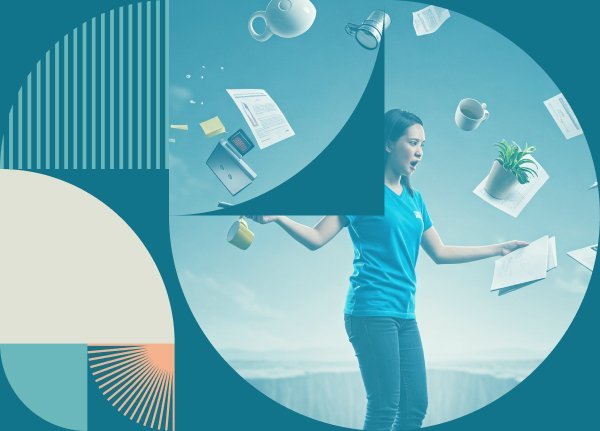
From our very first summer job right through retirement, women are often forced to navigate a complex maze of conflicting expectations and frustrating double standards in the workplace.
Here are five fun things women deal with while existing at work (not even counting the really big stuff, like the ol’ earning 15% less than our male coworkers ?).
- The likeability trap: Women who assert themselves at work are perceived as unlikable or bossy, while men exhibiting the same behavior are seen as strong leaders – discouraging women from advocating for themselves. About 88% of high-performing women receive feedback on their “personality” in performance reviews compared to 12% of men.
- The beauty paradox: Women are judged on appearance in ways men are not: too attractive and they’re not taken seriously; not attractive enough and they’re dismissed. They’re also still subject to more dress code expectations, even if they’re unspoken.
- The superwoman myth: The expectation that women can (and should) “have it all” – personally and professionally – creates unrealistic pressure and leads to guilt or burnout when reality doesn’t match the ideal.
- Motherhood penalty vs. fatherhood bonus: Mothers face lower pay, fewer promotions, and assumptions about their commitment to work, while fathers are seen as more stable, reliable, and deserving of higher pay. (For extra fun, single mothers get paid less than single fathers. And child-free women are seen as unreliable and unpromotable, but expected to work more overtime.)
- Silence paradox: When women speak up, they risk being seen as aggressive or shrill; when they stay quiet, they’re seen as passive or lacking leadership qualities. Either way, penalized.
America Ferrera’s Barbie speech sums it up pretty well, too.


