

BIG QUESTIONS
Do you know how to sell ideas?
Some marketers believe that creative ideas should either be bulletproof or die a quick death. But good ideas are rarely bulletproof. In fact, they’re fragile little things. Like little lambs walking through a big, dark forest. To have any hope at survival, they must be presented, protected, and romanced. It’s the marketer’s job to do that at their company, but since today’s work volume is high and deadlines are fast, those ideas are simply…unceremoniously…emailed to their colleagues. As a result, boring safe ideas, which actually ARE bulletproof, are the ones that make it through the gauntlet. Boring safe ideas are therefore more often proposed. It’s a sad story of gradual decline in idea quality and erosion of taste until the entire organization is belting out Celine Dion ballads at karaoke night (metaphorically). Good creative ideas are different. And different feels a lot riskier – makes people nervous and twitchy. But “different” literally is what creativity means. Different is powerful. Different works. Presenting good ideas and protecting them through approvals used to be something that marketers were skilled at (and rewarded for). Now they’re rewarded for data. The thing is, the data would be soooooo much more compelling if the ideas were good. Think about it.
TOOL JOY
Google Ads now generates images for you

You know those photos of culturally, ethnically, gender-ally diverse humans that marketers wallpaper their ads, blog headers, and email nurture campaigns with? Well, Google is introducing a new feature in Google Ads that lets you generate custom images of adult people (their words) with the help of Imagen 3. Using a simple text prompt, you can generate images that contain adult people (again, their words) across Performance Max, Demand Gen, and Display and Apps campaigns. Obviously, the better the prompt (see advice below) the better the outcome. And if it’s adult robots you want instead, they can do that, too.
DESIGN WE ❤️
NEO humanoid robots do your grunt work

As the dizzying pace of technological advancement continues unabated, the line between science fiction and reality blurs ever more. Robots hold an increasingly important place in our civilization, but have thus far largely been hidden from public view, humbly executing their tasks within the confines of the factory or laboratory. But the era of domestic robots is nigh, and we’re fascinated/a little horrified by the prospect of accessible (sorta), autonomous humanoids that can do your bidding (i.e., grunt work) without complaining, asking for a raise, or quitting on you. 1X tech is working on just such a robot, called NEO. So now you can binge watch your fav Netflix series on the couch while the cleverly designed bot goes about tidying up your crib. We just have one request – could the good folks at 1X tech consider making it look a little less like a Squid Games villain?
SPECIAL FEATURE
Featured content format: Short-form video

According to a recent survey from LinkedIn, short-form video is driving the highest ROI of any content format. But there’s also a lack of understanding of the complexity of making good videos – not to mention a firehose of crappy ones. So we offer up this recorded Lunch and Learn where our video experts discuss the why, how, and how much of videos. We cover formats, styles, steps, tricks, and, everyone’s favorite – how to save money while still staying faithful to your brand. Give it a watch.
BEEP BOOP

Bartendroid! Bring me a mojito!: Meta is building humanoid robots to do your household chores, according to an internal memo. They did not say which chores.
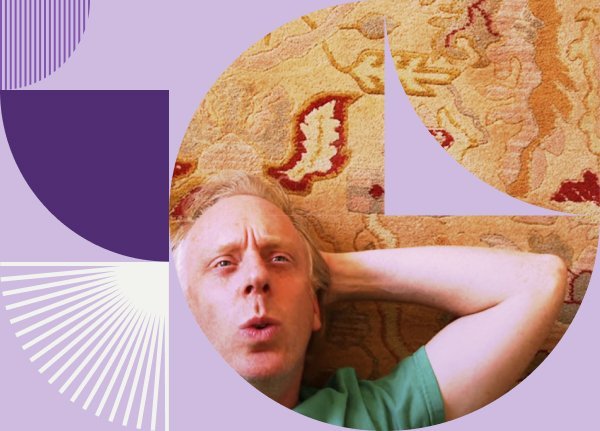
Thinking IS doing: “White Lotus” creator Mike White talks about the creative process, and it looks an awful lot like not doing anything at all (video: 4:20).
Soooooo cheesy: Rich Silverstein and the designers at GS&P created the new logo for Cheetos using a font called “Other Hand Font.” A messy scrawl emphasizing what happens when you live with your dominant hand covered in Cheetle (Cheetos dust).
Dunning-Kruger death spiral: The internet promised to unite the world. Instead, we got a big “attention casino” and the house always wins. Let’s shift how we engage online.
Moist lotion, dry humor: Dove’s deep moisture body wash provides all-day lotion-soft skin! And its new TV ad gives us a good laugh about the discomfort people have with that, uh, word.
Bonus: Stripe’s billionaire Irish co-founders, the Collison brothers (a Pinwheel client, btw) warn against return-to-office mandates, saying they cater to the bottom 5% of the company.
WORD TO THE WISE
“Powerful creative can be 10 to 20 times more sales-effective than mediocre creative.”
Peter Field, renowned marketing researcher
WHAT CLIENTS WANT
How to write the perfect AI prompt
The perfect AI prompt framework, originally from Ben Hylak and recently shared by OpenAI’s President Greg Brockman, is built on four key pillars (video here):
- Goal – Clearly define what you want.
- Return Format – Specify exactly how you want the response structured.
- Warnings – Highlight any important details the AI should double-check.
- Context Dump – Provide background info to improve the response.
Interesting side note: A new study from LinkedIn indicated that 72% of marketers are overwhelmed with AI.
ICEBREAKER
How many official paying jobs have you had and what was your fav?
Melissa: 19 jobs. My favorite (which covers five employers) was working in live sports television. Hard to complain when you are being paid to watch sports – and travel to Paris for the World Cup.
Irene: 7 jobs! My favorite so far has been working as the media director for my college radio station, having a show, making posters, and having access to tons of music events all while getting paid!
Todd: 31 jobs, the first being a paper route at the age of 13. My fav was selling business phone books door to door in Prague because I got to see every inch of that marvelous city on foot and meet people from every corner of the world.
Laura: 22 jobs, the first selling greeting cards door to door at 6 years old. My favorite was in NYC in my very early 20s working as an editorial assistant at Metropolitan Home magazine. Pay was shockingly low, but the people and the magazine were amazing, and I felt like I’d really made it.
Sarah: 35 or so. My favs are a toss-up between teaching at a children’s summer circus camp running my vintage biz.
Kim: Somewhere around a dozen jobs. I loved being a nanny in Switzerland after college because I got to travel, and I loved walking dogs in middle school because, well, dogs.
Jason: 20+. My first job was being a “courtesy clerk” at a grocery store; my job was to bag groceries and load them into customer cars. I actually liked the job and learned how to build relationships with customers. My not so great job was working in a tanning salon.
John: Hoo boy, if contract gigs count, I lost track years ago. But I could safely say it’s in the 50+ range. My first job out of college was as a counselor at a youth home for teen girls. Yeah… In a way, it was my fav because it taught me the true meaning of empathy, which as a designer, is an indispensable skill.
FALLACIES, PARADOXES & THEORIES…OH MY
Hick’s Law (and how it can make you a better marketer)

In 1952, psychologists William Hick and Ray Hyman found that when we’re faced with multiple options, our reaction time grows exponentially with each new choice. In other words, we become quickly overloaded – and that overload tends to lead to inaction. Instead, we choose nothing. As marketers, this means we should streamline choices, simplify navigation, curate options based on what we already know about the customer, provide super-clear calls to action, present information in a step-by-step way, and use simple, clear massaging. Every word, sentence, and paragraph asks your readers to make choices. Which ideas to focus on? What matters most? Where is this going?


